International TradeAdvancing the policies and partnerships needed to unlock global trade in clean energy.


Last updated: 24 Nov, 2026
Overview
The transition to net zero will reshape global trade and industrial production. Countries with abundant, low-cost renewable energy will be well placed to produce energy-intensive commodities. International trade can help reduce the cost of global decarbonisation by connecting these resources with countries where renewable energy is more constrained or expensive.
Australia is well placed to contribute to this emerging trade by exporting renewable energy embedded in products such as iron, aluminium, fuels and fertilisers. TSI's research identifies the potential for export revenues six to eight times those of fossil fuels by 2060, and emissions reductions equivalent to up to 9.6 per cent of global emissions in 2021.
TSI's International Trade Program examines the policies and economic conditions needed to realise these opportunities. We research international energy demand, emerging trade opportunities and the frameworks needed to establish competitive markets for low-emissions commodities. We also work with governments, industry and researchers internationally to strengthen cooperation and support the development of new trade.
Snapshot
Flagship Report
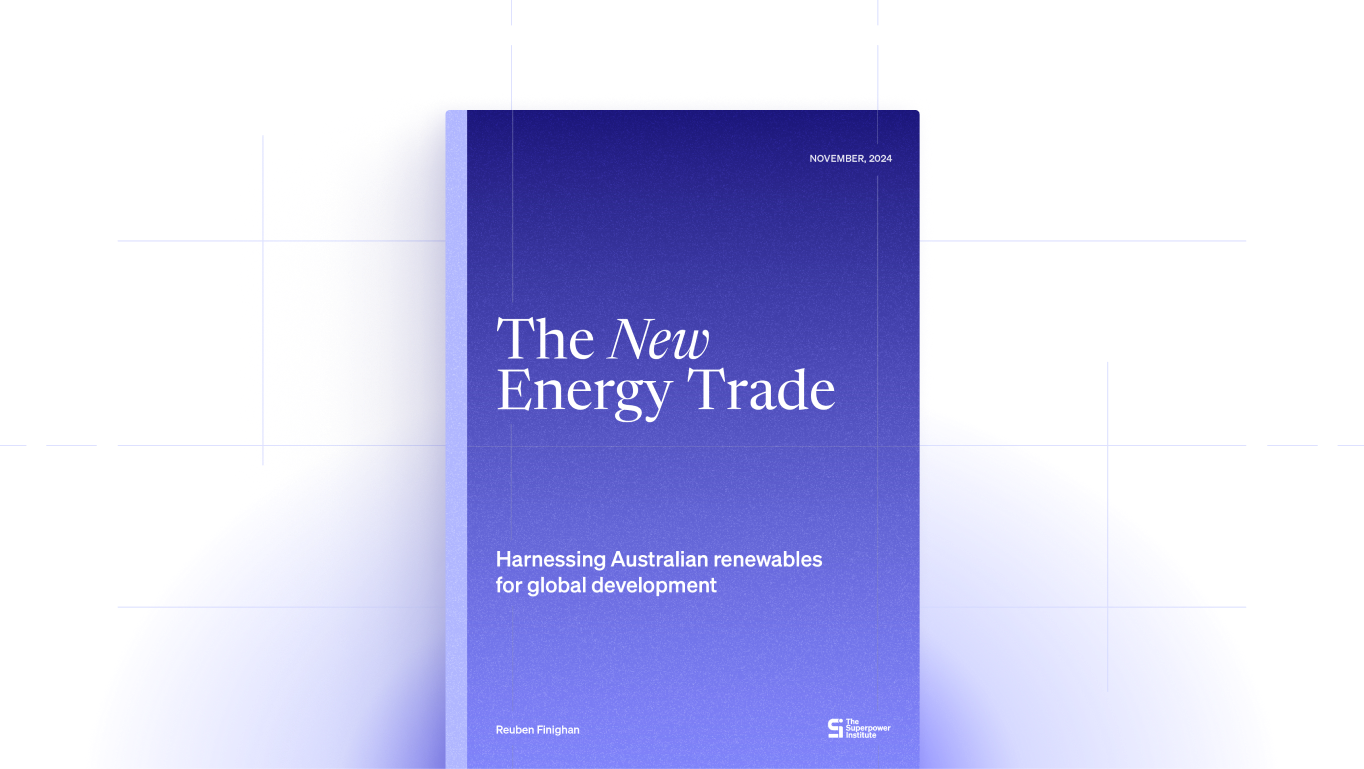 The New Energy TradeWorld-first analysis of the superpower trade finds Australia could contribute up to 9.6% of the world's emissions reductions while generating six to eight times larger revenues than those typical from Australian fossil fuel exports.
Team

Joanna Kay
Program Director, International Strategy, Partnerships and Engagement

Reuben Finighan
Research Lead, Economic Pathways

Angela Bruckner
Research and Business Administration Manager