This explainer outlines how the proposed Fair Share Levy would raise billions in public revenue — without reducing investment, raising gas prices or impacting jobs.
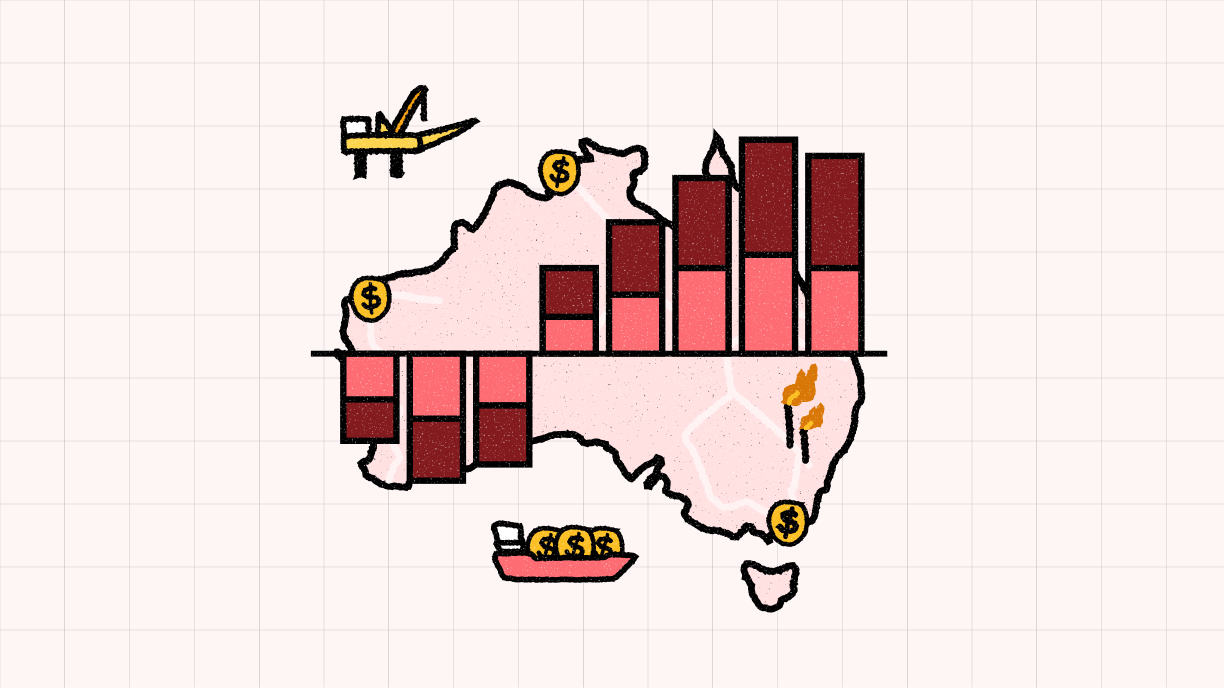
The Fair Share Levy is a two-way cashflow-based levy on the sale of Australia's gas resources, modelled on the system used successfully in Norway.
Unlike conventional taxes that reduce a project's rate of return, this design takes a consistent share of both revenues and costs.
The result: the ratio between costs and returns remains unchanged, meaning firms face the same investment incentives as before.
In practical terms, the government acts like a silent equity partner — sharing 40% of both the risks and the rewards. Projects that were commercially viable before the levy remain viable after it. The only difference is who shares in the profits.
Australia's gas resources belong to the Australian public. The Fair Share Levy ensures more of the wealth they generate is retained domestically to fund essential services such as health, education and housing — rather than flowing to offshore shareholders.

Reuben Finighan
Research Lead, Economic Pathways
Reuben holds a PhD in Political Economy from the London School of Economics and a Masters of Public Policy from the Harvard Kennedy School, as a Fulbright, Frank Knox, John Monash, and Leverhulme scholar. He has co-authored papers with Harvard Professor Robert Putnam, Ross Garnaut AC, and Lord Nicholas Stern, and previously worked at the University of Melbourne in applied economics and as Chief Economist for the Universal Commons.