
Overview
The Superpower Institute (TSI) welcomes the Government’s consultation paper on developing a clean fuels industry. TSI is supportive of the goals set out in the paper:
- strengthen fuel security and resilience
- unlock economic opportunities
- reduce emissions from liquid fuel use.
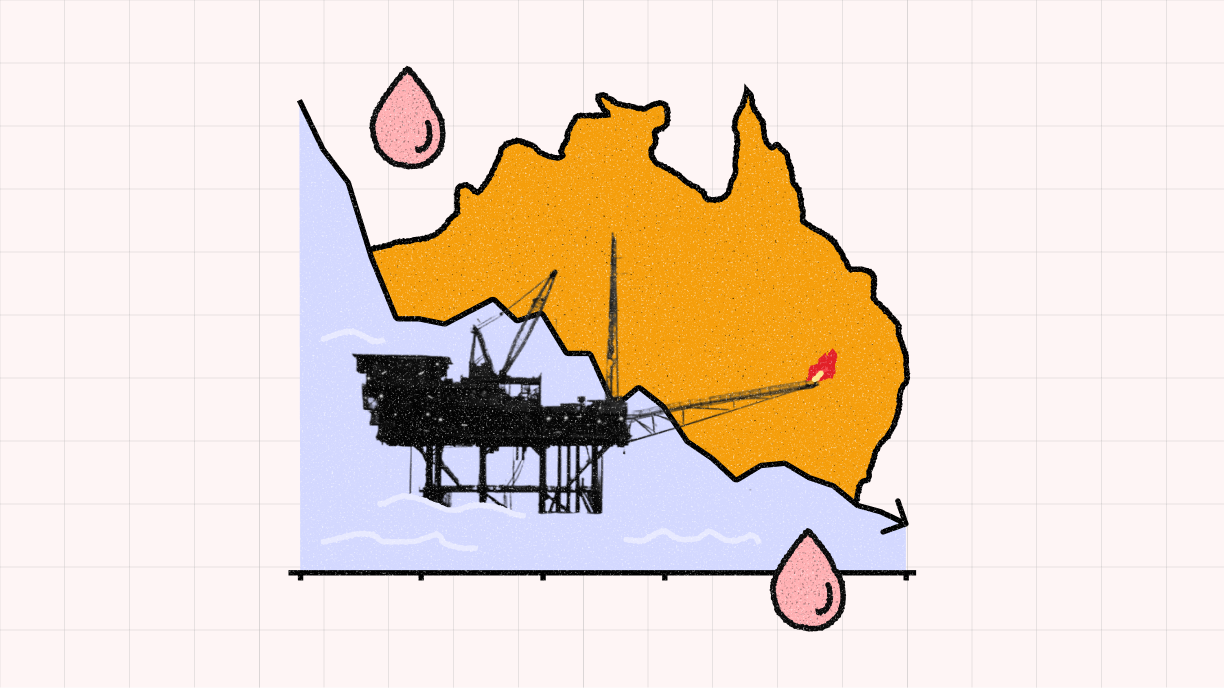
Liquid fuels are the largest source of energy used in Australia, a significant source of emissions, and an on-going vulnerability given Australia’s limited ability to meet its own needs due to limited and declining crude oil reserves. (1)
TSI agrees that there is a role for Government intervention to address market failures that deter investment in solutions to these challenges. The relevant market failures in this case are:
- the non-pricing of carbon emissions
- the innovation spillovers that are necessary for technological development but disadvantage early movers
- private underinvestment in secure supply chains, which have public-good benefits
TSI has made the case for an economy-wide carbon price that would address the carbon emissions externality, in the form of a Polluter Pays Levy.(2) In the case of liquid fuels, such a mechanism would make clean fuels relatively more attractive than fossil fuels, providing an efficient signal for investment in a low carbon liquid fuels industry in Australia.
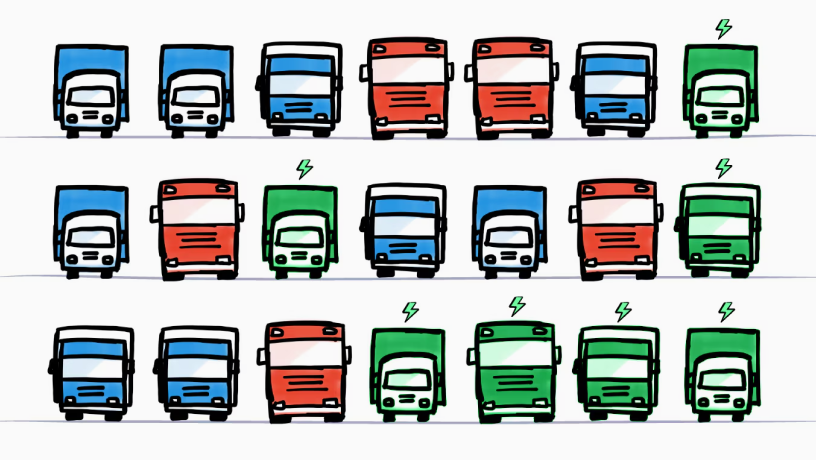
TSI has also made the case for Australia to address fuel security by focusing on the levers that will have the most impact: electrification and low-carbon liquid fuels.(3) Australia can move from 17 per cent fuel security today to 87 per cent by 2040, increasing our sovereign fuel supply from 4 per cent to about two-thirds sovereign. This work also highlighted the need to address coordination failures in charging infrastructure, innovation spillovers and demand-side risk for new investment. Professor Ross Garnaut has also highlighted the need for policy intervention. (4)
Against this backdrop, the Government’s conceptual framework could address these market failures. However, TSI has identified three main issues with the Government’s proposed phased approach, which will limit the effectiveness of the policy, and substantially weaken the Government’s ability to achieve its goals.
- The two-phase approach undermines timely investment in low-carbon liquid fuels (LCLF), introduces additional sustainability risks, and unnecessarily increases costs.
- Excluding electrification as a credit-eligible activity limits the benefits of the scheme for fuel security and decarbonisation.
- Allowing unconstrained imports risks undermining the objectives of fuel security and the development of a domestic LCLF industry.
TSI’s assessment is that the two-phase approach is unnecessary and that the second phase of the proposal contains the policy mechanism that is best suited and most likely to achieve the Government’s objectives of fuel security, emissions reduction and economic opportunity.
The table below summarises the impact of the two phases in achieving the Government’s objectives.
Achieving the Government’s Objectives
| Policy objectives | Phase 1 Volumetric mandate 2029–2035 |
Phase 2 Carbon-intensity standard 2035–2050 (incl. electrification) |
|---|---|---|
| LCLF industrial development | Orange, partially supports objective: Mandated use of LCLFs, undermined by lack of policy certainty and allowing imports | Orange, partially supports objective: Aviation sub-targets incentivise LCLF development, but compete with electrification for land-based uses |
| Least cost fuel security | Orange, partially supports objective: Incentivises LCLF use to diversify supply, with some domestic production likely | Green, consistent with objective: Electrification is the strongest fuel security lever. Aviation sub-target underpins LCLF investment. |
| Least cost decarbonisation | Red, undermines objective: LCLF is expensive near-term abatement – distorts away from least cost abatement | Green, consistent with objective: Incentivises most cost-effective abatement in transport and aviation. |
- Policy phases are very unlikely to, or undermine, Government objectives.
- Policy phases will partially support Government objectives.
- Policy phases are consistent with Government objectives.
Recommendations
- Adopt the Phase 2 carbon-intensity standard from 2029 and remove the volumetric Phase 1.
The mechanism proposed for 2035 is the one best suited to the Government's objectives. Deferring it forfeits six years of abatement and leaves projects that depend on it unbankable. - Make electrification, including charging infrastructure, a credit-generating activity from commencement.
Electrification is the largest available lever for both fuel security and emissions reduction, and crediting charging infrastructure addresses the binding constraint on its deployment. - Set a separate aviation benchmark.
This underpins investment in low-carbon liquid fuels where there is early demand and demand will endure, and ensures cheaper abatement through road transport electrification does not displace this demand. - Set a minimum requirement for domestically produced fuel and allow imports only within limits.
Unconstrained imports substitute one fuel dependency for another and weaken the case for domestic investment, while limited imports retain their value as cost containment. - Require certification that captures land use change emissions.
Australia's proposed Guarantee of Origin is the only standard globally that does not consider these emissions by default. Correcting this is essential to the integrity of low-carbon liquid fuels as a source of abatement. Alternatively, consider using
The remainder of this submission focuses on
- How the government’s “conceptual framework” can be measured against the three objectives of the policy: fuel security, economic development and emissions reduction.
- Important design features of the policy.