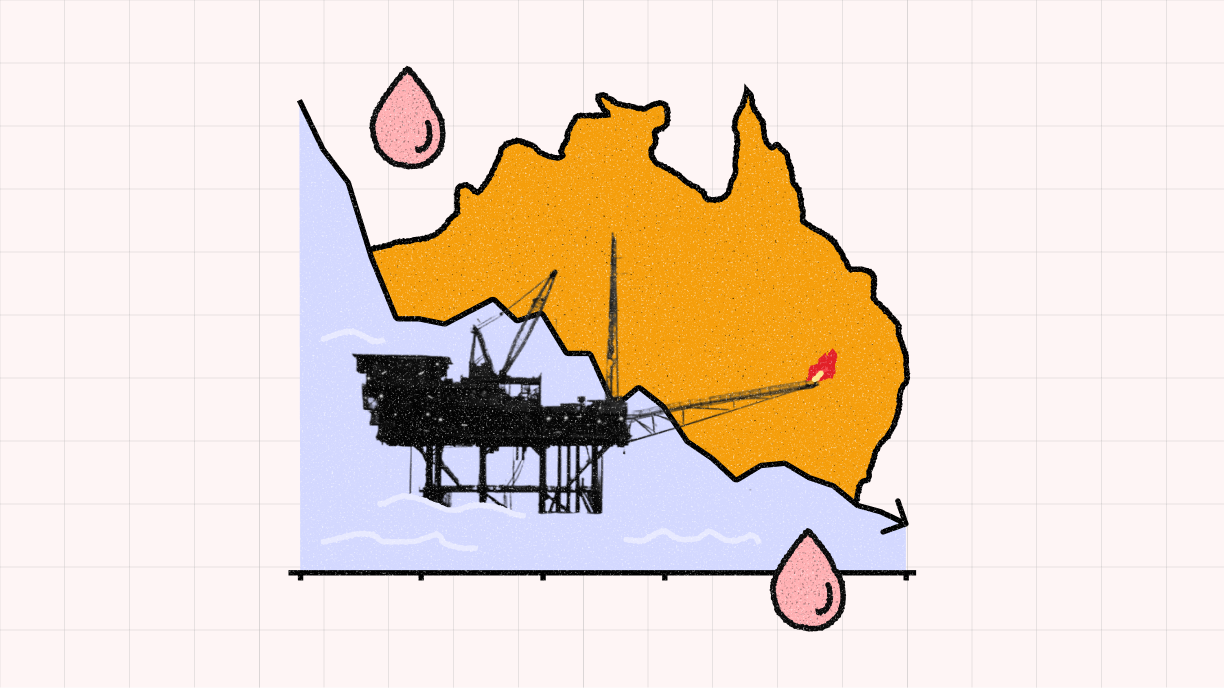
The Hormuz crisis has exposed Australia’s vulnerability to recurring fuel supply shocks and price volatility because of its dependence on imported fuel. While we are an energy-rich country, we are fuel-poor. Expanding domestic refining of Australian crude oil is not a credible solution: Australia’s crude oil resources are too limited, slow and expensive to develop, and are not well suited to producing diesel - the fuel type the economy needs most. Australia cannot drill its way to fuel security.
Today, the Superpower Institute's latest research, How Australia can break its foreign fuel dependence, outlines the practical pathway, using two different levers, to achieve fuel security of almost 90% by 2040.
Electrification
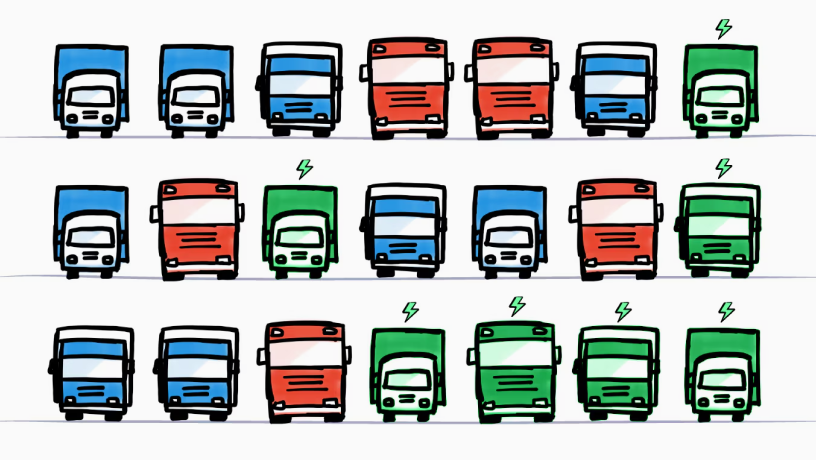
Electrification is the fastest, most cost-effective and efficient way to improve Australia’s fuel security. Electrification directly improves fuel security by displacing demand for liquid fuels.By replacing imported petrol and diesel with domestically produced electricity, Australia can substantially reduce liquid fuel demand across cars, trucks, mining equipment and agricultural machinery. This lever can improve fuel security to 14% by 2031, 32% by 2035 and 58% by 2040.
Low carbon liquid fuels (LCLFs)
Low carbon liquid fuels can reduce import dependence in Australia’s remaining ‘hard to electrify’ sectors, including aviation, shipping, and some remote land uses in mining and agriculture. Australia has natural advantages in producing LCLFs: abundant sustainable plant or animal-based biomass feedstocks from agricultural and forestry sectors, and large-scale renewable energy potential for green hydrogen and processing.
TSI’s research finds that domestic LCLF production can reach 2% of total fuel demand by 2031, 10% by 2035 and 15% by 2040 - addressing 35% of residual fuel demand after electrification by 2040. This is the second most effective lever and the only one that can meet almost all of Australia’s hard-to-electrify aviation demand.
To unlock this fuel security, the Australian government should:
- Reform regulations on weight restrictions for heavy vehicles so that battery heavy trucking can move seamlessly between states.
- Significantly fast-track charging infrastructure for heavy vehicles.
- Introduce a demand mechanism for sovereign fuel sources for hard-to-electrify aviation and shipping fuel suppliers. An option is an LCLF mandate, requiring fuel suppliers to incorporate a rising share of LCLF into their product.
- Innovation grants for first-of-a-kind (FOAK) projects.
- Bolster regional diplomatic agreements to underpin low carbon liquid fuels investment and build a fuel secure region.
Rod Sims, Chair of The Superpower Institute said:
"The Hormuz crisis is the most significant energy shock on record. Australia now has the incentive, the capability and clearly the technology to wean itself off foreign fuels.
“If Australia wants to achieve fuel security this latest research shows there is only one path forward. We no longer have to be held hostage to global crises when it comes to securing our fuel supply.
“This latest research shows how Australia can reach almost full fuel security by 2040 if we follow an achievable and cost effective pathway: electrification and low carbon liquid fuels.
“For those who say ‘drill baby drill’, this is a borrowed slogan, not a strategy, and is wishful thinking by those who for whatever reason oppose using the renewable energy and biomass that Australia has in abundance. Australia’s crude oil resources are extremely limited, whatever new resources we find would be slow and expensive to develop, and in any event would not be well suited to producing diesel - the fuel type the economy needs most.”
CEO of the Superpower Institute, Baethan Mullen said:
“Australia can secure almost 90% of its fuel supply by 2040 if we make the right decisions now.
“Australia has suffered numerous global oil shocks, but none as significant as the one we are experiencing now.
“Targeting electrification - particularly of heavy vehicles – and incentivising low carbon liquid fuel production in Australia is the smartest way to secure our energy supply so Australians no longer have to be worried about when and if they can fuel up.
“This is an opportunity that can’t be wasted. It would be unconscionable if we are still worried about diesel supply in 2040 and haven’t used the next decade to get ourselves off foreign fuels.”