The fuel shock triggered by the conflict in Iran has hit farmers, freight operators and households at the pump. It is also a reminder of Australia’s exposure to global events outside its control. Fuel security is in sharp focus. But beyond the immediate steps needed to insulate our economy, there is a risk of Australia pursuing costly policies that leave us poorer, but still no more secure in the long run. Instead, we must play to our advantages.
The Commonwealth’s recent responses, including shoring up fuel shipments and temporary relief for households and businesses, are appropriate. But temporary relief does not address the underlying drivers of Australia's fuel insecurity. For long-term fuel security we need durable, least-cost solutions.
The public debate has also returned to a familiar set of proposals: expand domestic oil exploration, rebuild refining capacity and invest in coal-to-liquids fuels. These ideas are often presented as a path to self-sufficiency.
‘Drill baby drill’ is a slogan not a strategy.
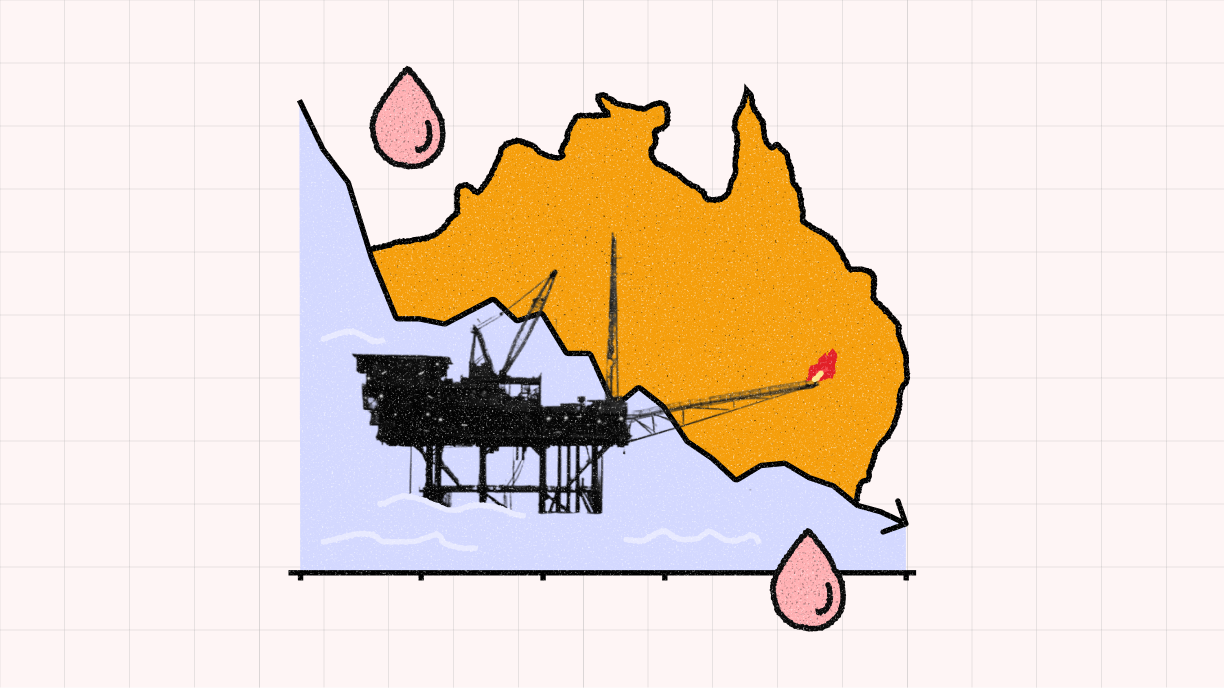
New modelling by The Superpower Institute shows that even the most ambitious effort to source and refine domestic crude oil would peak at around 5 per cent of demand, lasting a few years before resource exhaustion.
Instead, Australia can move from 17 per cent fuel security today to 87 per cent by 2040, not by drilling for more oil, but by electrifying what we can and making clean fuels from our own resources.
Australia can achieve very high levels of fuel security by 2040
TSI anlysis: ‘How Australia can break its foreign fuel dependence’
Start with exploration. Australia has not broadly prohibited oil development, and companies have had decades to identify viable projects. Known resources exist, but they have not reached final investment decision because they are not commercially competitive at scale.
Between 2016 and 2020, BP, Chevron and Equinor all abandoned drilling in the Great Australian Bight because the resources were not commercially competitive. And the arithmetic is unforgiving: a new field takes 10 to 15 years to bring online, yet Geoscience Australia projects that without new discoveries, domestic crude production will cease within seven years.
Geoscience Australia projects that without new discoveries, domestic crude production will cease within seven years.
There are also technical challenges. According to the Australian Institute of Petroleum, additional domestic refining capacity in Australia would result in more crude imports as domestic crude production is ‘insufficient and unsuitable by itself to achieve self-sufficiency in transport fuels.’ Most of what Australia produces is condensate – a light petroleum that mostly yields petrol, not the diesel and jet fuel that dominate Australian demand.
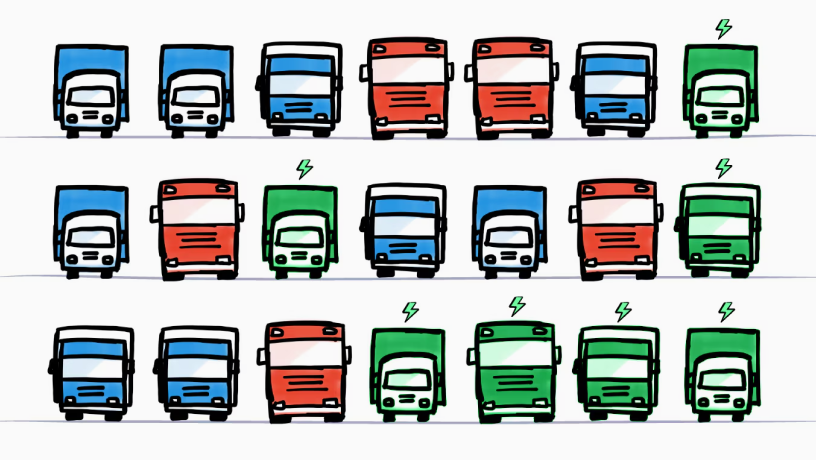
The more important point is where Australia’s long-term strengths lie. Electrification is, in most applications, the lowest-cost way to provide energy for transport and industry, and its role is expanding. On our modelling, electrification alone can displace nearly 60 per cent of Australia’s liquid fuel demand by 2040.
Electric passenger vehicles are increasing their share of new sales and, over time, reduce exposure to global oil markets. The Hormuz shock has accelerated the shift: EV sales reached 30 per cent of new cars in May, up from around 15 per cent late last year. This is driven by consumers recognising the favourable economics of an EV: the average family can save around $20,000 over the life of the car.
Heavier transport will follow, as commercial decisions will also favour lower total cost of ownership driven by fuel cost savings.
For aviation and shipping, low-carbon liquid fuels are the practical pathway. Australia’s advantage lies in abundant renewable energy and biomass, which can support production at scale over time. In aviation and shipping fuels especially, Australia can serve its own needs and play a major part in supplying an emerging global market. Our modelling shows domestic low-carbon fuels could meet 95 per cent of Australia’s jet fuel needs by 2040, starting with a project pipeline of over two billion litres already at advanced stages of development.
What is needed is policy that moves us toward our long term economic, security and emissions advantages. That means a demand mechanism for sovereign fuel sources, targeted grants for first-of-a-kind low-carbon fuel projects, reform of the weight restrictions holding back electric heavy trucks, and faster investment in charging infrastructure.
Strategic reserves and related mechanisms have a role, but they are not a real form of fuel security. The larger our reliance on imports, the bigger and more expensive the stockpile we need to hold.
It has been sensible for government to focus immediate attention on cushioning the current shock. The larger task is to reduce exposure to the next one. That depends on whether this moment is used to accelerate the transition already underway or to subsidise a system in decline.

Baethan Mullen
Chief Executive Officer
Baethan Mullen has over 20 years of experience in public policy, economics and advocacy. Prior to joining the Superpower Institute, Baethan was General Manager of Economics & International at the ACCC, and led the largest energy efficiency program in Australia as Executive Director at the Essential Services Commission.

Lauren Burns
Program Director, Green Carbon Industries
Dr Lauren Burns is an expert researcher working at the intersection of engineering, climate and energy policy. A former TSI Director, she has 15 years’ aerospace industry experience, including work on hybrid-electric aircraft at Heart Aerospace and Zunum Aero. She holds a PhD in Aerospace Engineering from RMIT University.