For over a decade, the Australian climate debate has been tethered to the trauma of 2013, when the federal Coalition prosecuted a highly effective campaign against the Gillard-Rudd governments’ carbon price, branding it a ‘great big tax on everything’. The Coalition won the subsequent election, and ever since the prevailing orthodoxy in Canberra has been that carbon pricing is a third-rail issue – a policy so toxic that its mere mention could trigger instant electoral backlash.
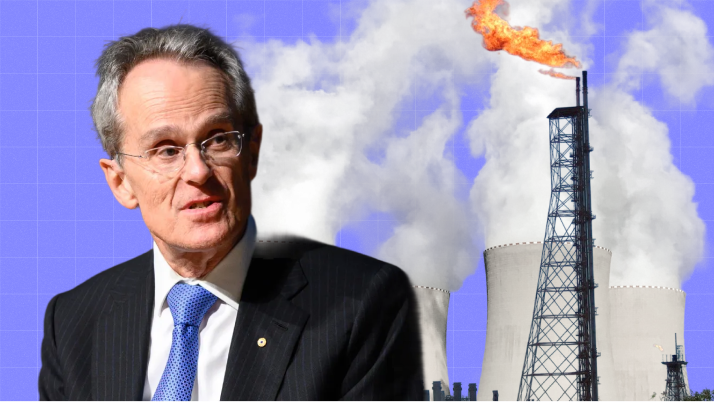
However, in a recent webinar for The Superpower Institute, Redbridge Director of Strategy and Analytics Kos Samaras argued that this strategic paralysis is based on outdated, and often incorrect, assumptions.
According to Samaras, today’s electorate, political coalitions, and the values that drive voter sentiment have all fundamentally changed since Tony Abbott ‘axed the tax’
TSI’s latest report, The Case for Pricing Pollution, proposes two key reforms that challenge this old caution: a Polluter Pays Levy on fossil fuel extraction, and a Fair Share Levy on the sale of Australia’s gas resources.
When Redbridge tested these concepts with voters, the results pointed to a significant shift in the political landscape – one defined by demographic renewal, political fragmentation, and a growing sense of economic dissatisfaction and institutional mistrust. Within this new paradigm, where populist tendencies on the left and right are increasing the pressure for significant reform, a window is opening for the government to reframe climate action as an economic fairness issue rather than a household burden.
This article is based on a presentation and Q&A with Kos Samaras on Redbridge Group’s latest polling and insights on the Australian electorate today and the ways that it has shifted since 2013.
The composition of the electorate has fundamentally changed
The last time carbon pricing defined a federal election, the demographic map of Australia looked very different. Baby Boomers made up over 60 per cent of the electorate; today, they represent closer to a quarter.
By the next election, Millennials and Gen Z will comprise nearly half of the voting public. Typically, ‘life cycle effects’ would assume that these younger voters would drift toward the Coalition as they age and acquire assets. However, data from the ANU Australian Election Study confirms that this conservative shift has stalled. Unlike generations before them, Millennials are not trending toward the Liberal Party as they enter their 30s and 40s. In fact, those who do move away from the centre are often bypassing the major parties entirely.
This demographic shift is reflected in the Coalition’s collapsing support in metropolitan areas. At the 2025 federal election, the Coalition was reduced to just 8 urban seats out of 88. These younger, urban voters have created an alternative path to electoral victory that doesn’t rely on regional and rural electorates.
“You can't win elections unless you're winning the politics of Melbourne and Sydney and Brisbane and the big cities.”
The rise of economic and right wing populism, and the common ground between them
Samaras identified two highly tribal and populist currents currently reshaping Australian politics, both born from dissatisfaction with the status quo.
The first is an economic populist bloc, largely consisting of younger voters in cities, renters, and households under financial stress. They lean toward Labor and the Greens, demanding better services and economic intervention.
The second is a right-wing populist bloc, skewing older and often concentrated around minor parties like One Nation. This group is defined by deep suspicion of institutions and perceived elitism.
While these groups sit at opposite ends of the spectrum, they share a skepticism of corporate elites and a frustration with cost-of-living pressures. And, as Samaras explains, this shared frustration hints at an opportunity for reform.
Kos breaks this down:
The ‘climate wars’ are real, but they mask a deeper consensus on fairness
On the surface, climate action remains a polarised issue, split by age and party lines. When voters are asked if Australia should ‘do more’ on climate, for example, the usual divides appear
However, Redbridge’s research found that when the conversation shifts from abstract environmental ambition to economic fairness, that polarisation dissolves.
When asked whether Australia’s largest polluters should pay for the greenhouse gases they emit – the principle underpinning the Polluter Pays Levy – support broadens significantly, including among Coalition voters.
| Voter group | Net agree (Regional) | Net agree (Rest of Aus) |
|---|---|---|
| All voters | +46 | +52 |
| Labor | +83 | +79 |
| Coalition | +22 | +33 |
| Greens | +97 | +83 |
| One Nation | -3 | -13 |
The shift is even more striking when the conversation moves from pollution to economic fairness.
When asked whether Australians deserve a better return on the sale of natural resources like coal and gas, support becomes overwhelming across almost all demographics:
| Voter Group | Net agree (Regional) | Net agree (Rest of Aus) |
|---|---|---|
| All Voters | +84 | +82 |
| Labor | +89 | +83 |
| Coalition | +88 | +84 |
| Greens | +64 | +84 |
| One Nation | +91 | +84 |
Crucially, this includes voters typically assumed to be hostile to climate policy. Regional One Nation voters, for instance, register the strongest support for the idea that gas companies should pay a ‘fair share’ of their profits back to the community.
The conventional wisdom says Australia is too divided on climate to act, but the data suggests something more nuanced.
So, would carbon pricing still be vulnerable to a scare campaign?
In the Q&A session that followed, the discussion turned to campaigning. A question was asked: given the evidence before us, would a 2013-style scare campaign against a Polluter Pays Levy or Fair Share Levy be effective?
Samaras acknowledged the risk but argued the electoral terrain has fundamentally shifted. In 2013, the ‘axe the tax’ campaign was most effective in regional electorates where the threat of job losses loomed large. Today, the path to the Lodge runs almost exclusively through the major cities – a map where the Coalition has been "busted down to 8 urban seats out of 88."
Furthermore, the messenger has lost its authority. Samaras noted that “the levels of distrust about the big end of town... is off the charts.” Unlike a decade ago, industry-led campaigns now land on a skeptical, disillusioned public that is far more likely to view corporate lobbying as an attempt to ‘fleece’ them rather than a warning about the economy.
Turning polling into political action
Strong polling doesn't automatically translate to easy reform, but Samaras emphasised that the risk of doing nothing is now greater than the risk of action. For the Albanese government, the choice is between managing a slow decline or seizing a new mandate.
“They will need to embrace reform across a number of challenging policy areas to convince a growing number of voters on their side of the political ledger that they are in the business of fixing the system,” Samaras argued. “People are not just going to reward treading water.”
The broader lesson is that the political risk calculus has shifted fundamentally. The shadow of 2013 still lingers over the halls of Parliament House, but clinging to those old fears is a failure to recognise the Australia of today. As Samaras warned, voters are no longer looking for "safety" – they are looking for a system that isn't stacked against them.
The current state of the Coalition serves as a stark warning. “We now have a preview of what happens to a political party when it seems to be just interested in band-aids: the Coalition. They are experiencing it right now.”

Adam Grant
Communications Director
Adam Grant is an experienced creative professional with over a decade of expertise in digital innovation, creative direction and campaign strategy. His award-winning work spans global brands and NGOs, with a focus on impactful storytelling and driving positive social change.