Following the release of the Australian Government’s National AI Plan, attention is turning to the infrastructure required to support rapid growth in artificial intelligence – particularly the expansion of large-scale data centres.
These facilities are energy-intensive. As global technology companies accelerate investment in AI, electricity demand from data centres is expected to rise sharply in many countries, including Australia. This raises questions about how large new electricity loads interact with the energy transition.
What does growing demand from AI infrastructure mean for Australia’s electricity system? Who pays for the generation, transmission and storage needed to support these developments? And how can data centres be integrated into the grid in ways that support, rather than complicate, the transition to cleaner energy?
This briefing from Monash University's Climate Change Communications Hub brings together leading experts in energy systems, economics and the social impacts of digital infrastructure to discuss how Australia’s emerging AI sector may shape the future of the electricity system.
Featuring TSI Chair Rod Sims, UTS Transdisciplinary School researcher Dr Bronwyn Cumbo, and Monash University Senior Lecturer in Data Science & AI Dr Hao Wang. The session examines what current policy settings suggest about energy demand, system planning and investment, and what journalists should watch as AI infrastructure expands.
Transcript of opening remarks by Rod Sims:
My key point is that Australia has a huge opportunity in relation to data centres. It very much is an opportunity, but we won’t realise it — indeed, we’ll have a lot of problems — unless we have both a carbon price and the ESM, and we massively improve our project approvals.
If we can do that, we can take advantage of the opportunity. If we can’t, we’ll probably suffer from the opportunity. So that’s the key point I want to make.
Data centres are a real opportunity. They’re very important. They’re energy intensive, which should be an advantage for Australia. We need them. Where you don’t want long lags in the data, you need data centres close to the cities where they’re being used. So Australia needs its own data centres. But where you can have long lags, or long latency, we can also supply data centres into Asia because we’re well placed to do that. So we need them, and it’s a big opportunity as well.
The reason, of course, we’ve got the opportunity is because we’ve got tremendous renewable energy resources. Irritatingly, I keep running into people who say, “Well, you can’t run data centres on intermittent energy.” To which the answer is: of course you can’t. Nobody’s talking about intermittent energy. It’s solar, wind, batteries and gas. You can firm these things up as much as you want, and whatever you’re using to finally firm them doesn’t cost much. The underlying economics are based on the solar, wind and batteries.
This contrasts with trying to meet data centre needs with things like coal or nuclear. They would be much, much more expensive. They would take a much longer time. Firm renewable energy is much more scalable than any of those things. So that’s where we absolutely have to look.
The problem is that, at the moment, the market isn’t sending signals to provide more renewable energy. We have a Capacity Investment Scheme which is not really bringing forward the renewables we need. It’s basically government controlled. The incentives aren’t there because they’re not underwriting the equity.
We really need a market-based system. At the moment, the market signals, particularly through the forward curve, are just not giving the signals you need for renewable energy investment. No signals, no investment.
Energy generation has always been market based, ever since we did the reforms in the 1990s. So we need that. To do that, you need a carbon price to send that signal. We need the ESM to extend the tenor of available contracts.
With those two, plus improving the approvals processes, we will get the renewable energy we need to power the data centres. If we don’t do those things, we won’t.
What we’ll instead find is that data centres come on, electricity prices go up, and that chokes off demand. But that’s a dreadful way to deal with the problem. That’s what we’re heading for unless we bring in that carbon price, in addition to the ESM, and fix our approvals processes.
The carbon price is the crucial bit. And just to finish: the one that the Superpower Institute is advocating would raise $22 billion a year, more than enough to overcompensate households. So you don’t run into that pushback from households. You not only fully compensate them, you should overcompensate them and put the money in the bank. Don’t lower the electricity price, which is what we did last time.
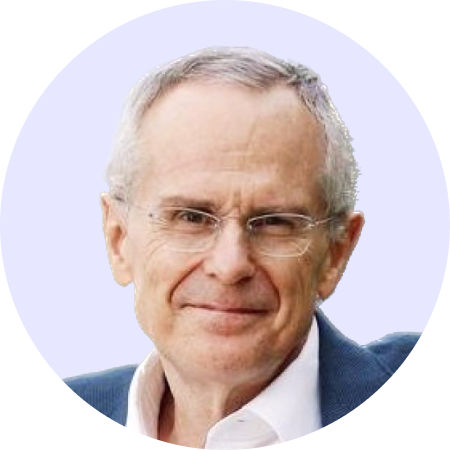
Rod Sims
Chair, The Superpower Institute
Rod Sims is Enterprise Professor at the Melbourne Institute of Applied Economic and Social Research, Faculty of Business and Economics, University of Melbourne, and Chair of The Superpower Institute. He previously chaired the ACCC (2011-2022), served as Deputy Secretary (Economic) in the Department of Prime Minister and Cabinet, and Principal Economic Adviser to PM Bob Hawke (1988-1990).