Why WA should back low-carbon liquid fuels over a new oil refinery
Jessica Shaw on ABC Perth Mornings with Nadia Mitsopoulos
Jessica Shaw joined Nadia Mitsopoulos on ABC Perth Mornings to question the case for a new oil refinery in Western Australia. With the proposal expected to cost around $15 billion and take 10–15 years to build and likely requiring significant public funding, Jessica argued there's a smarter path to fuel security.
Western Australia already grows the canola needed to produce low-carbon biodiesel for mining, agriculture, and other heavy industries, yet two-thirds of the crop is currently shipped overseas for processing. Rather than doubling down on crude oil infrastructure exposed to global price volatility and declining domestic reserves, Jessica made the case for investing public funds in homegrown low-carbon liquid fuel production.
Transcript
Jessica Shaw, former Labour MP who's an energy consultant, and now the way programme director of the Superpower Institute. What do you make of this, Jessica? Is this a good idea?
Well, good morning Nadia. Well, look, I think it's absolutely vital that we have a very laser like focus on our energy security. I mean, there's been some real challenges, obviously highlighted in recent months, but there is a much better opportunity for Western Australia here to turn us not just from an energy superpower, but into a fuel, a liquid fuel superpower. And that's utilising the canola that we already grow. Those for those low carbon liquid fuels, we don't have to necessarily leave ourselves vulnerable to ongoing crude oil imports. We can produce low carbon liquid fuels. Here in Western Australia, two thirds of our canola crop is already used for that purpose and processed in in Asia and Europe. We could be doing that here. We can produce the diesel that our mining industry, our agricultural sector requires. And of course, everybody is focused nowadays in cars on on electrification of our small passenger vehicle fleet. So great that we've got the focus on fuel security. But there are other pathways that could give us long term fuel security and really limit our exposure to that volatility in crude imports.
Interesting what you say, Jessica Shaw, because I spoke to the energy Minister, Amber-jade Sanderson, about this, and she said in conjunction with this, there is obviously work progressing in regards to biofuels and that they will be part of the mix, are we not? You're saying that that that is not enough, or we're not tapping into that as much as we could be?
I think we could be doing. Well, I will acknowledge both the federal and the state governments are looking at this. But if we're going to be spending millions of dollars of taxpayers money, um, let's spend that on, on an industry that has a real diversification opportunity and represents a long term different pathway for Western Australia. I just think that an oil, if a private company wants to go ahead and invest in a, in an oil refinery, good luck to them. But if we're going to be spending public funds on something, let's look at these new opportunities and and leverage the capabilities that we already have here, the stuff we already grow here, and that's going to help our agricultural and mining sectors to continue on delivering all the benefits to Western Australia.
They already do. I spoke to energy analyst Saul Cavanagh. He said, look, it would probably cost around fifteen billion dollars. And and given that the current two oil refineries we have are are propped up by taxpayers money, it would be inevitable that some public funds would have to go in into this. And in fact, Amber-jade Sanderson also said, well, it's a reasonable expectation that government money would have to get put into this. Do you think taxpayers would not like this?
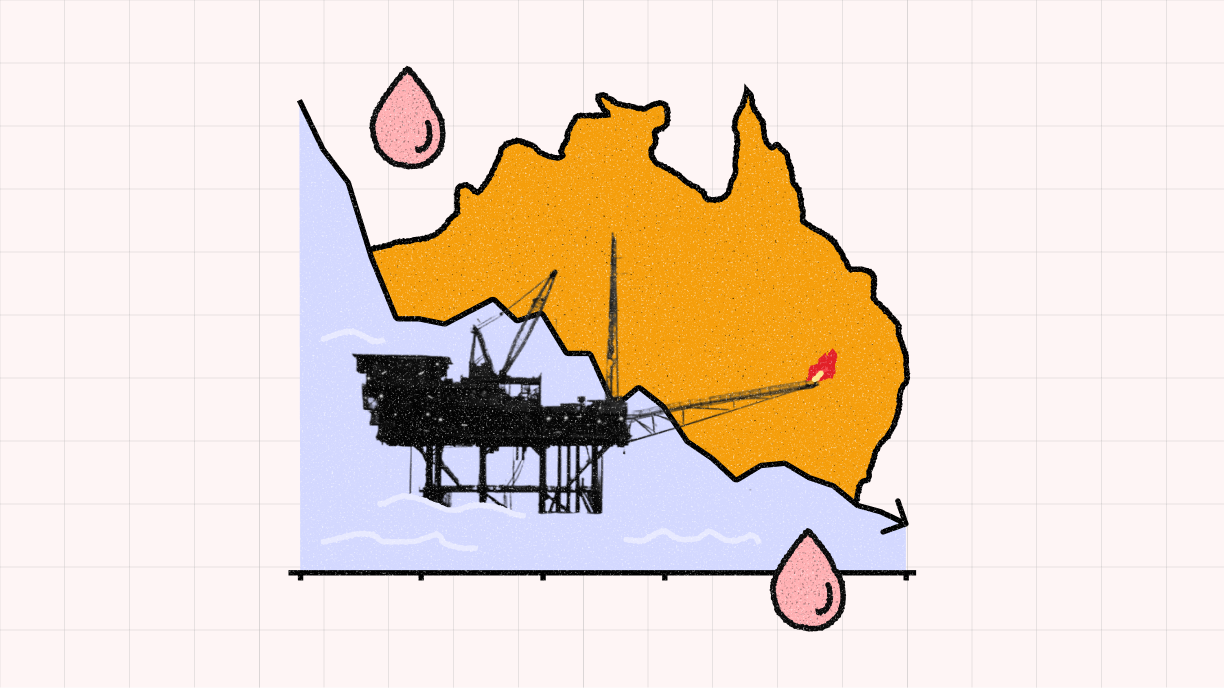
Well, I think taxpayers would like our money to be invested in industries that have a long term future and that do represent diversification opportunities. And when you consider that we can produce biodiesel here using our own homegrown canola, um, I would think that we should be focusing on opportunities like that, not on a, on a fuel source that at the end of the day is always going to be exposed to that global volatility. Geoscience Australia itself have pointed out that with the seven percent year on year decline in the production of oil here, the seven there's probably about seven years left of production of oil left here and no new sources that they've yet identified.
Well, that was Saul Cavanagh was saying there is some off the WA coast and some in Queensland. Bass Strait is running out.
Absolutely. Well, with crude oil on the decline. This plant is going to take ten to fifteen years to build and fifteen billion dollars worth of of expenditure. And I just think that there's better things that we could be focusing on in, in sustainable industries that can deliver on our estimates somewhere between one hundred and eighty to up to three hundred billion dollars worth of export revenue into the country. Not only that, help us as a country decarbonise and help our trading partners with their own decarbonisation initiatives as well. It's a win all round.
Alright, I'll leave it there. Jessica Shaw, former Labour MP. Thank you for your time. She's now an energy consultant and she's with us. Super Power Institute, the WA program.

Jessica Shaw
WA Program Director
Jessica Shaw is a former WA Parliamentarian (2017–2025) and Parliamentary Secretary to the Premier. She holds degrees in law, politics and international relations, a Master of Law from Cambridge, and has studied energy and climate policy at Harvard. She is a Fellow and Honorary Life Member of the Australian Institute of Energy. Jessica is also a Director of Tactica Advisory.